Showing posts with label Career Tips. Show all posts

Sunday, 6 December 2015

10 Things Successful People Never Do Again...


We all make mistakes but the people who thrive from their mistakes are the successful ones.
“Never go back.” What does that mean? From observations of successful people, clinical psychologist and author of Never Go Back: 10 Things You'll Never Do Again (Howard Books, June 2014), Dr. Henry Cloud has discovered certain “awakenings” that people have—in life and in business—that once they have them, they never go back to the old way of doing things. And when that happens, they are never the same. In short, they got it.
“Years ago, a bad business decision of mine led to an interesting discussion with my mentor,” Dr. Cloud says. “I had learned a valuable lesson the hard way, and he reassured me: ‘The good thing is once you learn that lesson, you never go back. You never do it again.’


“I wondered, what are the key awakenings that successful people go through that forever change how they do things, which propel them to succeed in business, relationships, and life? I began to study these awakenings, researching them over the years.”
Although life and business have many lessons to teach us, Dr. Cloud observed 10 “doorways” of learning that high performers go through, never to return again.
Successful people never again…
1. Return to what hasn’t worked. Whether a job, or a broken relationship that was ended for a good reason, we should never go back to the same thing, expecting different results, without something being different.
2. Do anything that requires them to be someone they are not. In everything we do, we have to ask ourselves, “Why am I doing this? Am I suited for it? Does it fit me? Is it sustainable?” If the answer is no to any of these questions, you better have a very good reason to proceed.
3. Try to change another person. When you realize that you cannot force someone into doing something, you give him or her freedom and allow them to experience the consequences. In doing so, you find your own freedom as well.
4. Believe they can please everyone. Once you get that it truly is impossible to please everyone, you begin to live purposefully, trying to please the right people.
5. Choose short-term comfort over long-term benefit. Once successful people know they want something that requires a painful, time-limited step, they do not mind the painful step because it gets them to a long-term benefit. Living out this principle is one of the most fundamental differences between successful and unsuccessful people, both personally and professionally.
6. Trust someone or something that appears flawless. It’s natural for us to be drawn to things and people that appear "incredible." We love excellence and should always be looking for it. We should pursue people who are great at what they do, employees who are high performers, dates who are exceptional people, friends who have stellar character, and companies that excel. But when someone or something looks too good to be true, he, she, or it is. The world is imperfect. Period. No one and no thing is without flaw, and if they appear that way, hit pause.
7. Take their eyes off the big picture. We function better emotionally and perform better in our lives when we can see the big picture. For successful people, no one event is ever the whole story. Winners remember that – each and every day.
8. Neglect to do due diligence. No matter how good something looks on the outside, it is only by taking a deeper, diligent, and honest look that we will find out what we truly need to know: the reality that we owe ourselves.
9. Fail to ask why they are where they find themselves. One of the biggest differences between successful people and others is that in love and in life, in relationships and in business, successful people always ask themselves, what part am I playing in this situation? Said another way, they do not see themselves only as victims, even when they are.
10. Forget that their inner life determines their outer success. The good life sometimes has little to do with outside circumstances. We are happy and fulfilled mostly by who we are on the inside. Research validates that. And our internal lives largely contribute to producing many of our external circumstances.
And, the converse is true: people who are still trying to find success in various areas of life can almost always point to one or more of these patterns as a reason they are repeating the same mistakes.
Everyone makes mistakes…even the most successful people out there. But, what achievers do better than others is recognize the patterns that are causing those mistakes and never repeat them again. In short, they learn from pain—their own and the pain of others.
A good thing to remember is this: pain is unavoidable, but repeating the same pain twice, when we could choose to learn and do something different, is certainly avoidable. I like to say, “we don’t need new ways to fail….the old ones are working just fine!” Our task, in business and in life, is to observe what they are, and never go back to doing them again.


Monday, 19 October 2015

45 Pieces of CAREER ADVICE that will GET YOU to the TOP

Career Guidance - 45 Pieces of Career Advice That Will Get You to the Top

45 Pieces of Career Advice That Will Get You to the Top

When it comes to your career, sometimes it feels like you could use all the advice you can get. From picking the "right" career to actually excelling in it, there's certainly a lot to learn.
And that's why we've gathered our all-time best career advice. From starting out at the bottom of the totem pole to advancing to a more senior position to—who knows?—maybe even branching out to open your own business, we've collected 45 of the best tips for whatever stage you're at in your career.

On Working a Not-Quite-Dream-Job

1. The best career or job is the one in which you’re using the skills you enjoy. But, not every job needs to address all of your passions. Use every job as an opportunity to learn something new and keep an open mind; you may find that you really enjoy something you never imagined would appeal to you. Miriam Salpeter, Founder of Keppie Careers
2. Don't take yourself (or your career) too seriously. Plenty of brilliant people started out in jobs they hated, or took paths that weren't right at the beginning of their careers. Professional development is no longer linear, and trust that with hard work and a dedication to figuring out what you want to do with your life, you, too, will be OK! Kathryn Minshew, CEO of The Muse
3. Every person you meet is a potential door to a new opportunity—personally or professionally. Build good bridges even in that just-for-now job, because you never know how they’ll weave into the larger picture of your life. Kristina Leonardi, Career Coach
4. My friend Andre said to me, "You know, Marissa, you’re putting a lot of pressure on yourself to pick the right choice, and I’ve gotta be honest: That’s not what I see here. I see a bunch of good choices, and there’s the one that you pick and make great." I think that’s one of the best pieces of advice I’ve ever gotten.” Marissa Mayer, CEO of Yahoo!
5. No matter how low on the totem poll you are or how jaded you’ve become by your to-do list, it’s still important to show up early, wear something sharp, and avoid Facebook like the plague. I discovered that when I acted like a professional, I suddenly felt like my work was a lot more valuable. “Looking the part” boosted my confidence, helped me begin to see myself as a highly capable contributor to the team—and ultimately led the rest of my team to see me in the same light. Lisa Habersack, Writer 
6. Remember that a job, even a great job or a fantastic career, doesn’t give your life meaning, at least not by itself. Life is about what you learn, who you are or can become, who you love and are loved by. Fran Dorf, Author and Psychotherapist
7. If the career you have chosen has some unexpected inconvenience, console yourself by reflecting that no career is without them. Jane Fonda

On Advancing Your Career

8. Every year or two, spend some time really thinking about your career. Go out and warm up your network, check out new opportunities, and do some salary comparisons. You make smarter career decisions when you have real data. Also, if you are afraid or uncomfortable, you are probably onto something awesome! Fear means you are growing your comfort zone. Christie Mims, Career Coach
9. Don't be afraid to speak up in a meeting or to schedule a sit down with a colleague or boss—whether to hash out details on a project or deal with a sensitive situation. When it comes to having your ideas heard, or to really connecting with co-workers, never underestimate the power of face time and the importance of in-person communication. Catherine Straut, Assistant Editor of Elle
10. You’re setting yourself up for failure if you’re not preparing for an eventual promotion right now. Even if the next step in your career seems far off, you should be taking advantage of training and professional development courses and looking for ways to pitch in and expand your current role. Otherwise, even when the opportunity comes up, you won’t be ready to take advantage of it. Avery Augustine, Writer
11. Take criticism or "feedback" for what it is: a gift given to you to make you better at what you do. Don't concern yourself with the person or the method of delivery. Instead, glean out the teachable nuggets and move on. Michelle Bruno, President of Bruno Group Signature Events
12. I know. You’ve heard it a thousand times: Dress for the job you want, not the one you’ve got. But I think this message goes far beyond the clothes you wear every day: It’s how you present yourself in meetings and at office events, how you interact with staff both above and below you, and how seriously you take your work. Adrian Granzella Larssen, Editor-in-Chief of The Daily Muse
13. In chaos, there is opportunity. Most major career accelerations happen when someone steps into a mess and makes a difference. Kristi Hedges, Leadership Coach
14. Work harder than everyone under you or above you. Nothing commands respect more than a good work ethic. This means being the first one at the event in the morning and the last one to leave in the evening. No one said this gig was easy. Keith Johnston, Event Consultant at Plannerwire
15. When you’re offered a big opportunity, consider it carefully—even if it scares the heck out of you. In the end, high risk often leads to high reward. But if you turn down every opportunity that comes your way, you won’t even have the chance to succeed. Avery Augustine, Writer

On Excelling in Your Career

16. I first heard Zig Ziglar say it when people challenged him on his “positive attitude” manifesto: “You can do anything with a positive attitude better than you can do it with a negative one." Lea McLeod, Career Coach
17. Work hard and be nice to people. It’s a very simple motto I try to live by daily. Marie Burns, Recruiting Leader at Compete
18. There’s never going to be a precisely right moment to speak, share an idea, or take a chance. Just take the moment—don’t let thoughts like "I don’t feel like I’m ready" get in the way. Look to see if you have the main things or the opportunity will pass you by. Don’t let perfect get in the way of really, really good. Kathleen Tierney, Executive Vice President and COO of Chubb Insurance
19. "Find a way to say yes to things. Say yes to invitations to a new country, say yes to meet new friends, say yes to learn something new. Yes is how you get your first job, and your next job, and your spouse, and even your kids." Eric Schmidt, Executive Chairman of Google
20. No matter what your dream job is, you’ll likely hear “no” many times before you achieve your goals. Just accept that as a fact. But by refusing to accept that “no,” you’ll separate yourself from the pack. Sometimes you just have to outlast the competition—and wear down your boss! Shannon Bream, Supreme Court Correspondent at FOX
21. Tenacity and persistence—nothing beats it. Even if your talent isn’t there yet, you can always develop it to what it will eventually be. But people who are persistent and tenacious and driven and have a really clear, defined goal of what they want, nothing compares to that. Not giving up is really huge. Catt Sadler, Anchor at E!
22. Asking for help isn't a sign of weakness, it's a sign of strength. No one got to where they are today without help along the way. Don't be afraid to ask, and then remember to return the favor. Elliott Bell, Director of Marketing of The Muse
23. Even if you aren’t feeling totally sure of yourself and your abilities, it’s important you present yourself otherwise. That means shifting your body language to portray confidence. So, while you may be so nervous before your big interview or meeting that you want to curl into a ball, resist the temptation to cower or make yourself smaller, and walk in with your head held high. Michele Hoos, Writer
24. My advice for everyone in the industry is to find a mentor and to be a mentor. You'll learn a great deal from both of these experiences, and make sure to leverage these roles for networking. Ask your mentor for introductions, and introduce the person that you're mentoring to others—both will increase your visibility in the industry. Mariela McIlwraith, President at Meeting Change
25. I live by the 80/20 rule. 80% of the impact can be done with 20% of the work. It's the last 20% that takes up the most time. Know when to stop, and when things are close enough. Alex Cavoulacos, COO at The Muse
26. Having a strong network adds to your value as an employee. In other words, the more people I can reach out to for help, the more valuable I am. Hannah Morgan, Founder of Career Sherpa 
27. Do what you say you're going to do. Danielle LaPorte, Entrepreneur
28. One of the most important things I’ve found is the importance of playing to your strengths. I think it’s common for us to learn while in school that if you get an A+ in writing and a C- in math, that you should focus your time and attention to getting better at math. In the working world I find it to be the opposite; by putting your focus on those things that you are strongest at, over time you will become an expert at it. By outsourcing your weaknesses to others who excel in those areas, you’ll be able cover those weaknesses better than you could have otherwise. Trying to be great at everything could be spreading yourself thin and keeping you from reaching your full potential in your strongest areas. Ryan Kahn, Career Coach

On Starting Your Own Business

29. I think the biggest thing to keep in mind is that a lot of people have a lot of ideas that they’d like to turn into businesses—but if your ideas don’t turn into actual money, then you’re not able to turn it into a business. You have to be able to generate revenue first and foremost. A lot of people have conceptual ideas and conceptual dreams, and you just have to be able to distinguish between what is a hobby and what is a passion and what you can actually turn into a business. Emily Cavalier, Founder of Midnight Brunch 
30. No matter what you do, you’ll make it through. What doesn’t kill you makes you stronger. The thing they don’t tell you is that it nearly kills you. Tyler Arnold, Founder of SimplySocial Inc.
31. Early on in my career, I was determined to be independent and create my own success, and I thought this meant learning everything on my own. The reality is, you can’t always be an expert at everything, so surround yourself with brilliant, creative people and don’t be afraid to ask questions. Humility is key to success, especially in your early years. Ivanka Trump
32. I wish I knew that working smarter, not harder, is essential to surviving as an entrepreneur. You can get by working hard in the corporate world, but you won’t last long in small business ownership without working smart. Andrew Schrage, Partner and Editor-in-Chief of Money Crashers Personal Finance
33. Don’t let fear be the reason you don’t launch your new business. When have you ever felt fully ready to do anything this important in your life? All you can do is prepare as much as humanly possible, know that you’ve done all you can for your baby to shine, and send it out into the world. Megan Broussard, Founder of ProfessionGal
34. Remember all those stories you’ve heard of how the most successful entrepreneurs in the world made it to where they are now? Well, most of them started with different jobs or interests and amounts of money in the bank. The one thing they had in common is an unyielding commitment to doing whatever it was that needed to be done in order to make their dream a reality. Danielle Mund, Life Coach
35. If you’re serious about building a great, enduring company, you have to be willing to sacrifice some things. A vacation in the first year is likely going to be one of those things, so take one before you start! Ronnie Castro, Founder of Porch
36. If you are like me and follow many relevant business people, you often see tweets like "5 things to avoid when starting your business" or similar posts. You may even read them. But here’s the thing: None of that matters. Every journey is different. No two things work exactly the same. You will make mistakes. Embrace the fact that you made the mistake, learn from it, move on, and never repeat it. John Jackovin, Founder of Bawte
37. Be confident, don’t doubt yourself, and go for it. If you are sure there is an opportunity, you need to believe wholeheartedly in it—your team won’t be driven to succeed unless you are. Kellee Khalil, Founder of Loverly

On Doing What You Love

38. Don’t sweat it. Don’t beat yourself up about it. It’ll probably be scary or uncomfortable, but you always get to make a new choice if this one doesn’t work out. Steve Errey, Career Coach
39. “Your time is limited, so don’t waste it living someone else’s life…have the courage to follow your own heart and intuition. They somehow already know what you truly want to become.” These words, spoken by Steve Jobs during his 2005 Stanford commencement address, guide me on a regular basis. Michael Terrell, Founder, Terrell Leadership Group
40. Having an evolving bucket list or a career path that defies logic is 100% OK. After spending years envying the neatly defined careers of my friends, I came to the better-late-than-never conclusion that I wasn’t wired that way... Once I stopped fighting who I was and relaxed into the idea that different was okay, all the possibilities before me were exciting, not stressful. I love what I’m doing now, but I also know that I’ll probably have multiple careers throughout my lifetime. Kacey Crawford, Career Coach
41. When you need the courage to be bold, simply ask yourself, “What’s the worst that could possibly happen?” When you have the answer, ask, “Can I live with that?” And if the answer is yes, then take a leap! Cindy Bates, Vice President of Small and Mid-Sized Businesses at Microsoft
42. If you really want to know where you destiny lies, look at where you apply your time. Time is the most valuable asset you don’t own. You may or may not realize it yet, but how you use or don’t use your time is going to be the best indication of where your future is going to take you... Don’t follow your passions, follow your effort. It will lead you to your passions and to success, however you define it. Mark Cuban, Entrepreneur
43. Ultimately, you won’t really know what you love to do unless you actually bite the bullet. Until you give it a go, it’s really just speculation. So, whether you take a small step like signing up for a class or you dive head-first into entrepreneurship, roll up your sleeves and do it. You’ll never know until you try. Ruth Zive, Writer
44. The only way to do great work is to love what you do. If you haven’t found it yet, keep looking. Don’t settle. Steve Jobs
45. Life's too short to be stuck in a job you hate. Kathryn Minshew, CEO of The Muse

Tuesday, 13 October 2015

11 things to know before Choosing ARCHITECTURE

1

Drink tea not coffee. Coffee is great for a sudden burst of energy propping you up during late nights on CAD but beware! The caffeine in coffee gets into your blood quickly giving you an initial rush that, if sustained, will cause your body to burn out. A strong mug of tea has a similar amount of caffeine but it’s released more gradually keeping you focused but calm for longer. Tea is also an antioxidant, relieves tension and is less of a faff to make.
pinterest.com

2

Draw lots and draw by hand. Drawing isn’t just a way of communicating with others it’s a way of thinking. From Le Corbusier’s messy sketches to Zaha Hadid’s vast paintings, drawing is essential to the practice, culture and progress of architecture.
le_corbusier

3

When making models use a sharp scalpel. Scalpel blades are not cheap when bought from craft shops and blunt quickly but don’t be tempted to cut your costs by using dull blades. If you slip and cut yourself a blunt blade will give you a messy and painful wound that takes ages to heal. However, if you cut yourself with a fresh blade the wound will be cleaner, will heal faster and if serious will be easier for a medic to dress. You can save money buying scalpel blades online in bulk.
will_pomroy_scalpel

4

Pin-up straight. Sounds like a no brainer but it is amazing how many first year pin-ups lead to hastily taping drawings to walls wonkily. Even a rough sketch on torn butter paper deserves better than that. Invest in a huge box of pins and line up your drawings with each other as well as the wall.
crit_selection_22032013_73

5

Your tutors are an invaluable source of wisdom and ideas – use them lots. Don’t just wait for your weekly tutorial to roll around; actively seek out the advice, opinions and critique of your school’s faculty. Knock on their doors, email them, chase them through hallways, lie in wait near their office. Do whatever it takes.
ad_interior_architecture_ad_ia_studio_web_16.jpg

6

Your tutors’ knowledge only goes so far. Intelligence, experience and damning criticisms they may have, a monopoly on the truth they do not. Sometimes the best tutor is the one who tells you to design the blue house so you become even more determined to design the red one. Listen carefully and understand their point of view but take what your tutors say with a pinch of salt.

7

Power nap with caution. By the end of your time at architecture school your friends will have experimented with every sleeping cycle under the sun. Some will swear that 20 minutes sleep is more refreshing than 40. Others will switch to sleeping in four-hour bursts alone. You’ll see students making beds beneath their desks in studio or going 80 hours without sleep. There may well be times when you have to work late but the truth is that you’re never going to produce great work when knackered – far better to stay focused and productive during normal working hours than to let your course steal your sleep and productivity. Keep a regular daily timetable. Give yourself firm finishing times in the evening and stick to them.
studio_nl_desk_bed_1_650x435

8

Subscribe to a journal. Regularly reading an architecture magazine is an invaluable source of inspiration. A good journal should challenge you to think deeply about architecture and its relationship to the wider world but should also be a thoroughly good read and beautifully designed. From a tutor’s point of view the difference between students who are regularly reading articles or short essays in architectural journals and those who are not is dramatic. Luckily many architecture journals have great student deals on at the moment if you can find them. The Architectural Review is just £1 a week for students.
AR Cover

9

University grading systems are odd and architecture marking is brutal. Students who’ve been at the top of their class all their lives arrive at architecture school and find themselves struggling to get middle-of-the-road marks. Take heart. Your final grade is far less important than the skills and portfolio you’ll build on your way to it. The line up of internationally acclaimed architects is littered with designers who did badly at architecture school, dropped out or didn’t study architecture at all.
architecture_crit_quote

10

Eat delicious food. With so many deadlines it can be tempting to buy ready meals and takeaways rather than waste time cooking. This is a false economy. A good diet gives you more energy through the day, keeps you healthy and prepares you for a life of wearing slinky black turtlenecks. If you’re not the next Bompas and Parr already learn to cook some simple meals in large quantities that will keep for a few days – soups, stews, pastas and pastries.
a6f1c00c2709cb35ba3061aa3eee953c

11

Explore. Travel often with an open mind. Understand cultures and traditions different to your own. That doesn’t necessarily mean jet setting around the world or hitchhiking to Morocco. Wherever you are based there will be a myriad of unfamiliar communities and landscapes within easy reach. Get to know the country you are studying in better – even if you grew up there.
fbfb74746dad2b5acb5142f0bc807e2e

This Hypnotic Meditation Helps To Access Universal Wisdom You’ve Always Known

Article originally written by Jennifer Sodini and published at www.collective-evolution.com .
 and reviewed by STUDENTS ADVICE About a year ago, after a synchronistic meeting, I was introduced to “hypno-coach” (hypnotherapist/life coach) Grace Smith. I had always been fascinated by hypnosis and its potential, however, I was never really certain how it worked, or if it could work for me. Being interested in past lives, but not having a solid opinion on the matter, getting a past life regression (in particular) was something I had always dreamed of experiencing.
One day, Grace was visiting my town, and we opted to swap services; I read her tarot in exchange for a “Soulkey” hypnosis session. As Grace states:
Soulkey therapy was developed by a friend and mentor of mine, Martin Peterson. There are very few certified practitioners around the world and I am proud to count myself among them, along with the honor of having been appointed director of Soulkey, USA. Soulkey therapy is a way of accessing a heightened level of “inner knowing” and shared, seemingly universal, allegory.
light_of_wisdom_lotus_buddha_pyramid_hd-wallpaper-1413721
What this means is that, often times, clients with diverse backgrounds and very little in common on the surface, share deeply similar experiences during their Soulkey sessions, without having any prior knowledge of what to expect. For examples, clients regularly describe the “room” in which the Soulkey session takes place (as imagined in the mind), and their descriptive terms can sometimes be identical. I purposefully do not describe what the “room” “looks like” prior to the session for this reason; it never ceases to amaze me how many of clients all seem to “go to” the same exact “room” as soon as the process begins.
During Soulkey, deep healing and transformation is made possible through the use of hypnosis. While a belief in past lives is not required for Soulkey to be effective, many clients experience what has been described as past life experiences, life between life experiences, even future life experiences.

spiritual-awakening

Whether this is “accurate” in the sense that the client is actually re-living a prior incarnation is irrelevant as clients who believe the process is “real” and those who believe it is a fictional “story” experience, from the results we have documented thus far, equivalent levels of lasting healing after the session. It appears as though the subconscious mind cares not what the religious beliefs, or lack thereof, of the client are.
So far it seems that simply closing one’s eyes, relaxing deeply, and being guided through the process of “imagining” healing on the “soul level” has deeply profound effects, for everyone.
Anxious, but equally excited, I readied myself for the session with an open mind, allowing for any outcome. To my surprise, hypnosis seemed to be very similar to a type of meditation, with the hypnotist acting as the guide who unlocks deeper levels of information within your subconscious through suggestion. Hypnosis allowed me to “time travel” to my past, to get a better understanding of my present situation. While I was somewhat lucid, I mostly felt as though I had been guided into a dream, but in a gentle, familiar, and extremely non-abrasive way… again, very similar to meditation.
After my experience, what I have come to find out is that meditation, and hypnosis, while admittedly different, are both cut from the same cloth, in that they both serve as modalities to help you remember who you really are and let go of that which no longer serves you.

Spiritual-Evolution
According to Grace:
While there are many forms of meditation, perhaps the most popular iteration is one in which the meditator closes their eyes, focuses on their breathing and becomes aware of their thoughts so as to detach from them.
Hypnosis has as many different definitions as there are practitioners, usually some combination of, “a deeply relaxed and highly focused state which bypasses the critical factor of the mind.” For simplicity’s sake, I describe hypnosis as “meditation with a goal.”
By relaxing the body through progressive relaxation, counting backwards, imagery of safe places, and countless other techniques, the hypnosis client becomes highly suggestible as she reaches a state we call “somnambulism.” This is a state of deep theta brain wave relaxation and, without fail, every one of my clients who was a meditator exclaims after their first session “Wow! Hypnosis feels just like a really deep state of meditation.” Hypnosis is not a black out state, it isn’t sleep, and amnesia is not required for the session to be effective.
spiritual-awakening 

In fact, hypnosis is no different in feeling than that of a deep state of meditation, however, it is easier for most to reach this state through hypnosis than through the practice of mindfulness. The guided nature of the session gives support to the clients’ intentions to relax and enter into a safe place where lasting transformation is possible.
Essentially, meditation and hypnosis are limbs from the same ancient tree with her roots deep into the collective subconscious, and while their techniques and perceived benefits may differ slightly, the outcome on the whole is largely the same; distancing oneself from the limitations of the ego and accessing our truly limitless nature.
To synthesize the experience of remembering through hypnosis and meditation, Grace and I co-created the guided hypnotic meditation below, which allows you to unlock the ancient wisdom of our past that is within all of us, ready to be accessed, as we are ready.

Saturday, 26 September 2015

Choosing MANUFACTURING ENGINEEERING


What is Manufacturing Engineering?


More than the average person might realize, engineers are creative pillars of modern society. While a painter focuses his creative energy towards expressing himself on a canvas, a manufacturing engineer works on the creation of things, processes, and technology. We rely on the vision and genius of our society's engineers every single time we turn on the television, drive a car, check our email, do laundry, or take showers. Basically, the work of an engineer is involved with almost everything we do.

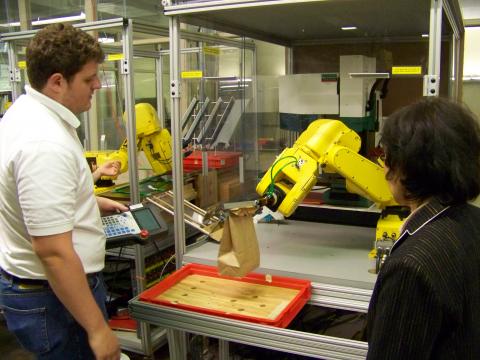
Manufacturing engineers have the task of making manufacturing processes better, faster, and cheaper. Their success or failure directly impacts the advancement of technology and the spread of innovation. A professional in this field constantly reviews the allocation of resources, analyzes productivity, and seeks ways to maximize production while minimizing cost. Manufacturing engineering careers offer challenging opportunities that never fail to engage intellectual curiosity and push the edge of innovative thinking.

As the demands of the American consumer continue to increase, manufacturing engineers will work to develop products, buildings, systems, and various other human necessities. The U.S. Department of Labor predicts that job opportunities for manufacturing engineers will continue to grow over the next decade-albeit more slowly than other industries, due in part to outsourcing. But as companies strive to update production and processes to keep pace with the speed and efficiency of modern technology, the skill sets and knowledge of educated manufacturing engineers will be in increasing demand.

Is Manufacturing Engineering the Right Choice for You?

To achieve success in manufacturing engineering, a quality education is an absolute must. Engineers draw heavily on mathematical and scientific knowledge, and these are skills best developed in a manufacturing engineering degree program. A good engineering degree program will provide students with an opportunity to fuse math and science with top-notch communications skills. But how can you decide if manufacturing engineering is the right field to pursue? There are several things to consider.

First, think about the scope of your engineering interests. Manufacturing engineering is just one facet of the engineering industry. Manufacturing engineers enjoy improving the production process from start to finish. They have the ability to keep the whole production process in mind as they zero in on a particular portion of the process. Successful students in manufacturing engineering degree programs are inspired by the notion of starting with a natural resource, such as a block of wood, and ending with a usable, valuable product, such as a desk.

Secondly, earning a college degree in manufacturing engineering involves intense and thorough study of advanced math and science, including calculus, computer science, physics, and other upper-level courses. Potential students should thrive in such courses. Proper preparation for an engineering education includes high school courses in math, science, computers, and computer assisted drafting.

Compare and contrast different manufacturing engineering programs to find the best fit. This is a good way to discover what qualities you're seeking in a program. Additionally, this type of research will help you figure out what questions to ask admissions counselors. The more information you can gather about a potential manufacturing engineering degree program, the better informed your decision will be.

It is also a good idea for prospective students to talk to an experienced manufacturing engineer. Ask questions about day-to-day job tasks, opportunities for career advancement, education requirements, and anything else you would want to know about your future career. This sort of career investigation will certainly provide a more complete picture of your future opportunities.

Manufacturing Engineering Degree Programs

Even within this highly specialized field of engineering, many choices exist. Whether you're a student interested in developing an initial set of engineering skills, or a professional engineer hoping to focus your general knowledge of manufacturing engineering, you'll enjoy plenty of appealing opportunities.


Online Degrees in Manufacturing Engineering

Recently, the options for studying manufacturing engineering have expanded to include distance learning. Online engineering degree programs enable more students to obtain a quality education without having to relocate to a physical campus. Online degrees have opened the doors to many future engineers, as well as professional engineers hoping to advance their existing careers. An engineering degree can open doors to many other related careers, including information systems management, computer programming, and business consulting.

Because the field advances quickly to keep pace with cutting-edge technology, many manufacturing engineers rely on distance learning to continually increase and improve their skills. Online education makes it possible for students to maintain commitments to full-time jobs while completing requirements to earn a degree. Online engineering students participate in online tutorials, web seminars, and interactive labs virtually. Students who enroll in distance learning degree programs enjoy a unique opportunity to tailor their own schedule and course load to fit in with existing commitments to jobs and family.

Certificate Programs in Manufacturing Engineering

Engineering certificate programs are a worthwhile option, both for new students seeking an introductory educational experience and for current manufacturing engineering professionals who want a more in-depth knowledge of their specialty. Online engineering certificate programs encourage students to improve their skills in a narrow, specific aspect of the field.

This allows manufacturing engineering majors to develop a focused expertise that could translate into stronger employment opportunities and job growth. In addition, when you complete the requirements for a certificate in engineering, many online degree programs allow you to transfer these credits toward a degree program. Certificate programs vary, and potential students should discuss particular degree programs with school admissions counselors.

Associate Degrees in Manufacturing Engineering

Engineering students pursuing an associate degree will discover opportunities in several engineering fields. Most associate's degree programs provide students with foundational knowledge of engineering technology -- a more vocationally-oriented specialization. Students who earn an associate's degree can qualify for many entry-level jobs in engineering technology fields. This is an attractive opportunity for students to get their feet wet in the classroom and on the job before deciding to pursue a more intense degree program.

Bachelor of Science in Engineering

The Bachelor of Science in Engineering is the foundation for the majority of manufacturing engineering careers. Most BSE programs focus heavily on the general concepts of engineering, math, science, and technology. Intense and rigorous, BS programs also emphasize the combination of strong engineering skills with the ability to effectively communicate. Students pursuing a BS in Engineering should also expect to study humanities, history, and ethics.

Co-ops, Apprenticeships and Internships

Students in manufacturing engineering degree programs enjoy several potential career paths. One helpful way to narrow down the options is to participate in engineering-related cooperative education programs (co-ops) and internships.

Because engineering involves applying science, math, and technology to real-world problems, engineering professionals find hands-on experience a critical part of a quality education. Students have the opportunity to gain solid work experience as interns and co-op associates, and manufacturing companies are able to find bright, motivated young engineers early in their careers.

The process of landing a summer internship or a semester-long co-op is very competitive, but this should be a priority for any manufacturing engineering student who isn't already in the industry. Major manufacturing companies offer internships to students who excel academically, demonstrate leadership potential, are willing to work hard, and have the ability to communicate effectively. It is not uncommon for a student to intern at the same company for multiple summers, and it is also not uncommon for companies to offer full-time employment to outstanding interns and co-op participants upon graduation.

What Can You Do With a College Major in Manufacturing Engineering?

  • Industrial Engineer. Industrial engineering often overlaps with manufacturing engineering. With a similar focus on manufacturing processes, industrial engineers focus on the product development process and seek to constantly streamline and improve manufacturing techniques. Professionals working in this field often pursue advanced training in quality assurance and operations management. Industrial engineers find work in several industries, including manufacturing, technology, and service. As modern technology continues to advance, industrial engineers are applying manufacturing techniques to most other industries.
  • Business Consultant. When a manufacturing company is having trouble addressing problems, they often hire a business consultant to offer advice and potential solutions. Successful engineering consultants are experts in particular niches or industries. Business consultants are able to look at problems objectively, formulate plans for improvement, and most importantly, effectively communicate with clients. Business consultants with degrees in manufacturing engineering are especially valuable to companies seeking to update and streamline production and assembly procedures. Knowledge of proven business and management principles is necessary for this career.
  • Operations Research Analyst. An operations research analyst studies processing and manufacturing procedures in order to determine areas for improvement and growth. Professionals in this field rely on extensive research and observation to make decisions and solve problems. Like a manufacturing engineer, operations research analysts are able to view the bigger picture of a production process in order to gauge how to make the individual components of the process cheaper and more efficient. Operations research analysts focus on the end result and continually try to improve their products. This type of position is found in various parts of the engineering industry, including manufacturing engineering and industrial engineering.
  • Engineering Technician. Engineering technicians apply scientific, mathematic, and engineering theories and methods to solve technical problems in various fields of engineering. Most engineering technician jobs require an associate degree. Engineering technicians in the manufacturing industry generally assist more experienced engineering professionals in research, product design, manufacturing procedures and various related tasks. The function of an engineering technician generally involves practical and physical assignments, like using an engineer's plan to build a prototype of a product or utilizing computer assisted drafting tools to generate virtual models.
  • Engineering Managers. Engineering managers are experienced engineering professionals who are successfully able to combine their command of engineering technique and theory with excellent communication skills. In general, an engineering manager guides, oversees, and directs teams of engineers and is responsible for the productivity and results of her team. Many engineering managers work in the manufacturing industry, and a background in manufacturing engineering is a solid foundation for future engineers hoping to pursue this advanced career path.
  • Information Systems Managers. Systems managers develop, modify, and monitor information systems, which collect and track data and enable users to recall and pull up information quickly. Information systems managers have to keep up with constantly changing computer technology and create plans to implement the latest technology on existing systems. In addition, they supervise teams of computer programmers, computer engineers and systems analysts. Information systems managers rely on their manufacturing engineering degrees constantly, in order to appropriately address the requirements of managing information systems.


Friday, 25 September 2015

List Of Affiliate Programs That pay Nigerians

List Of Affiliate Programs That pay Nigerians


The reason why Nigeria is not allowed to participate in the international paying platform is simple, eighty percent of internet users in Nigeria, use it abusively, the number one purpose if for fraud, both local and international fraud, so if you’re reading this and you’re a Nigerian don’t be mad that we are excluded from trusted countries online, The bad boys caused it. but the good news is people are stopping the bad habit, and we will soon get over it very soon. 

If You Missed My Post On AFFILIATE PROGRAM/MARKETTING simply click here

When it comes to online blogging/affiliate marketing, i come to realize that Nigerians are part of the leading 
team, but funny enough almost every affiliate companies dont accept applications from Nigeria. Click bank has just kicked Nigeria out of her service, So Nigeria bloggers and freelance writers, goes through series of stress in getting there money, if you’re reading this piece, i surely believe you’re not new to the system, so am just going to move straight to the points. Below i shall be witting out the company that accepts applications from Nigerians and short notes about them. None of them requires application fee!


1. AlertPay: They are just like paypal but the different is that they accept people from every part of the country, so they help in recieving and making online payment from every part of the world.
2. Godaddy :This is a hosting and domain website, they pay as at when due, and they accept application from nigeria and other west african countries
3. Commission Justice: www.cj.com they are marketing company that need advertisement and when people click through your website you get paid.
4. AdToll: They are advertising company, i have not really use them so i cant vouch for their payment validitation.
5. Payperpost: They are like agent for advertising companies, what they really do is get a writting job for you through their affiliate program.
6. Namecheap
7. NairaHost
8. bidvertiser
9. Addyanmo
This are all i could list for now but i will surely add more when ever i discover them. With these i think you should think about forgetting the use of virtual address, which might turn out to be fraud. 


         Good luck in your pursuit. To Make Money Online In Nigeria Fast And Easy

Choosing HEALTH SCIENCES


What do Health Majors study?

Health and medical science majors enjoy a wealth of career opportunities, from surgery to healthcare administration. Medical science majors generally focus on the pre-professional coursework that will form the foundation for their later work in graduate or professional schools. On the other hand, health science majors study the role of science in medical investigations, especially in areas like diagnostics and rehabilitation. Health and medical sciences majors are qualified for careers in hospitals, in health agencies, or in major pharmaceutical companies, just to name a few.
Health Healthcare Nursing

What Jobs Are Hot in Health and Medical Sciences?

Nurse -- Many mid-life career changers have flocked to the nursing profession for two major reasons. First, the current shortage of qualified nurses provides job seekers with extraordinary control over their schedule and commute. Second, despite potentially high levels of stress and fatigue on the job, many nurses report a significantly high degree of professional satisfaction, especially when compared with typical office or retail jobs.

Medical Assistant -- The U.S. Bureau of Labor Statistics (BLS) predicts medical assistants will be one of the fastest growing occupations from 2012 to 2022, with an expected 29 percent increase in available jobs. With continual changes to insurance procedures and malpractice insurance, many doctors will rely much more heavily on medical assistants to provide excellent patient care in busy practices. And as doctors delegate more and more tasks to medical assistants, today's health and medical science majors can expect a high degree of job security and satisfaction in these roles, which often provide significant tuition reimbursement and professional development benefits.

Physical Therapist -- As Americans live longer and recover more quickly from major surgeries, the demand for qualified, specialist therapists should expand even more in the next ten years. With a growing elderly population unaccustomed to losing their mobility, physical therapists will enjoy tremendous demand in the coming decades.

Experienced therapists can choose whether to work in a hospital setting, in a private practice, or even in client homes. Physical therapists and aides can expect a strong amount of schedule flexibility and the potential for higher than average financial rewards.

Pharmaceutical Representatives -- Global drug companies invent new solutions to health problems at a dizzying pace. To inform health professionals around the country about recent breakthroughs in medicine, pharmaceutical companies hire thousands of local representatives who can speak one-on-one with doctors and other caregivers about the benefits of new prescription drugs.

Health and medical science majors who share a love of sales and networking can launch rewarding careers that offer travel benefits, competitive salaries, and the opportunity to share exciting breakthroughs that can ultimately save lives.


Why Should You Consider a College Major in Health and Medical Sciences?

Health and medical sciences majors enjoy some of the rosiest career prospects among all students, according to the BLS. Not only will today's graduates replace aging baby boomers in the job market, but the number of baby boomers living longer and requiring long-term medical care foreshadows a demand for workers that few employers can adequately meet. Therefore, expect unprecedented battles for talent in the next few decades, marked by rising salaries, expanding job perks, and improved working conditions.
Even in today's market, employer demand for health and medical sciences majors has caused steady salary increases for graduates.

So many institutions are facing shortages that many graduates enjoy unprecedented job mobility and flexibility, whether they work in a private practice or in a major medical facility.
A recent search of a major job listings service identified nearly 3,000 unfilled positions for nurses in the Boston area alone. The same search shows the need for over 2,500 physicians' assistants and 1,500 therapists and researchers. Multiply these numbers across the entire country and you quickly understand the level of job security and high demand that today's health and medical sciences majors will enjoy throughout their careers.

Online Degrees in Medical and Health Sciences

It sounds counterintuitive, but thanks to advanced technologies, more and more healthcare students are able to earn their degrees partially or entirely online, depending on their specialties. Physicians and nurses, of course, must go through hands-on training, but aspiring healthcare administrators, psychologists, public health specialists and even nurse administrators have the option to study online. Distance education makes training possible for students who live in remote areas, far from teaching hospitals or career colleges, and those who must continue to work part- or full-time while they study.
Online degrees have become particularly popular for healthcare managers, whose work does not involve direct clinical contact, and registered nurses who have completed hands-on training and want to advance to managerial roles with a BSN or MSN. In some cases, even clinical degrees may be earned through hybrid programs, in which the student learns theory online and arranges for physical experience locally.

What Kinds of Candidates Make the Best Health and Medical Sciences Majors?

Because balanced, bright, and considerate individuals make the best health and medical sciences majors, admissions officers search for these positive traits and life experiences among their applicants:
  • Solid high school grade point averages
  • Strong scores on standardized tests like the SAT
  • A positive, upbeat personality
  • Volunteer experience in a hospital or other health care setting
  • Community involvement
  • Demonstrated problem-solving skills
Although the ability to absorb and apply complex medical theory will come in handy, most health and medical sciences programs emphasize the need for a graduate to enjoy life as a well-rounded individual. The quality of healthcare depends on filling vacant positions with smart people who possess a good bedside manner. Because consumers gain more control over their health care choices every year, strong patient service can directly impact whether a graduate's employer thrives or suffers over the years to come.

All you need to know about AFFILIATE PROGRAM/MARKETTING


If the phrase 'affiliate marketing' sounds like Greek to you, this is the guide you've been waiting for. Azozie Ebube, MD of studentsadvice gives a simple, easy-to-understand overview of the affiliate marketing industry, with ten handy tips to get you started. You could generate big returns from this online marketing strategy.
What is affiliate marketing?
Affiliate marketing is a way of making money by referring people to purchase items online. More and more companies are starting to use this form of marketing to reward affiliates for generating website visitors to their business. Affiliates are only paid when sales are completed so it's an extremely cost-effective tool.
PC World, for example, pay a 5% commission for every visitor an affiliate recommends who makes a purchase. While it's a small commission, the affiliate is able to benefit from PC World's brand awareness which can often result in sales being generated on a regular basis.
Commissions range from as low as 1% with established retailers, right up to 75% on some digital products. The health and beauty market is one of the most affiliate heavy, with average commissions around 30%.
How do I become an affiliate?
Becoming an affiliate is very simple and although each program may have their own criteria for approval, they are normally free to join and have no pre-requisites.
The best way to find suitable brands to promote is by simply using a search engine using: '[Brand] + Affiliate Program'. Some companies run in-house affiliate programs, however this is a very specialist area. Therefore, most companies opt to employ an 'affiliate network' which has already built a large base of affiliates and gained years of experience in running successful programs for clients.
You need to generate regular content and reviews around a certain topic. Typically the more content and research you generate the greater the likelihood of you generating significant sales, which is why I'd always recommend marketing something that interests you.


Top 10 tips on making money as an affiliate

1.    Choose the correct niche - This is one of the biggest determining factors of whether you'll succeed in making money online.
If you enjoy camping, for example, then start off by looking at Millets or Blacks and you'll have hundreds of products to choose from. However, if you try and market something you don't enjoy just to make money then it's possible you'll get bored and give up.
2.    Find the correct affiliate program - When comparing affiliate programs in your selected niche, you should consider more than just the amount of commission you'll earn.
The two most important elements we believe make a successful affiliate campaign include:

Communication:
Can you speak to the affiliate manager in charge of the campaign? A good affiliate program will have a dedicated affiliate manager who should be very accessible and responsible for helping you make money.
Desire:
Do the products or services you are considering promoting really stand out? Will they convert visitors into sales? Would you purchase it yourself? 
If you answer no to either of these questions it might not be a product for you.

3.    Find a mentor - When first starting out there's a steep learning curve. You need to answer questions like, How to make a website? Which products should you promote? How can you get visitors to your website?  Once the visitors are on your site, how do you convert them to sales?
I'd always recommend finding an affiliate network which offers a personal mentor, assigned to help you make money. MoreNiche currently runs a 14-day course which we think can turn anyone from a beginner into a fully functioning affiliate.

4.    Join a community - In addition to a mentor you should also consider joining a community of likeminded individuals. Here you can ask questions and get lots of unique feedback. Some leading affiliate forums include, Affiliates4U, ABestWeb and WickedFire.
5.    Get a free blog - Use a free blogging platform like WordPress or Blogger to create a site for free which can start to make you money. They're completely free, can be setup in minutes and are extremely easy to use.
6.    Stay Focused - It's very easy to get drawn into promoting lots of different products on the same site which, from a visitor's point of view, can be confusing. I'd recommend sticking to one topic on each of your websites.
Ensure you provide plenty of information about each product which will make the consumer feel knowledgeable enough to purchase after reading your site. It's essential you become a master of your niche and understand it inside out.
7. Don't spend money - The aim of affiliate marketing is to make money, but it's also very easy to spend money, which makes it harder to see a return. I'd suggest concentrating on free traffic generation while you find your feet, rather than spending money on Pay Per Click advertising.
When you become more experienced and knowledgeable you might want to think about buying new web addresses and paying for additional traffic generation.
8.      Content is king - Until you have cash, content is your king. The more articles, product reviews, visitor feedback and information you can publish on your website (or blog), the greater the chance you have of attracting visitors to your website. 
Search engines like to show fresh content so I'd recommend adding new pages to your website at least every few days. Make sure they're easily found by your visitors though a good side navigation or sitemap.
9.      This is not a get rich quick scheme - You shouldn't expect to put up a website tonight and wake up in the morning with your first cheque; affiliate marketing is not a get rich quick scheme and does involve work.
I've seen affiliates from all walks of life, based all around the world and with completely different skill sets, but the one thing they all have in common is dedication to their sites.

10.  Enjoy it - Affiliate marketing should be enjoyable and you have the flexibility to work when you want, where you want, and on whatever niche you want.
A large percentage of affiliates earn money running sites as a hobby alongside their full-time job and many have been able to add significant second income streams by doing so.
Go about it the right way and you can learn a lot about the internet, your chosen niche and consumer behaviour. By joining a community and working with a mentor there's also the chance to meet new people along the way, whilst making some money.


Powered by Blogger.